
Flooring · 7 min read
LVP vs engineered hardwood in a Texas home
· by Dustin Allan, Optimal Home Services
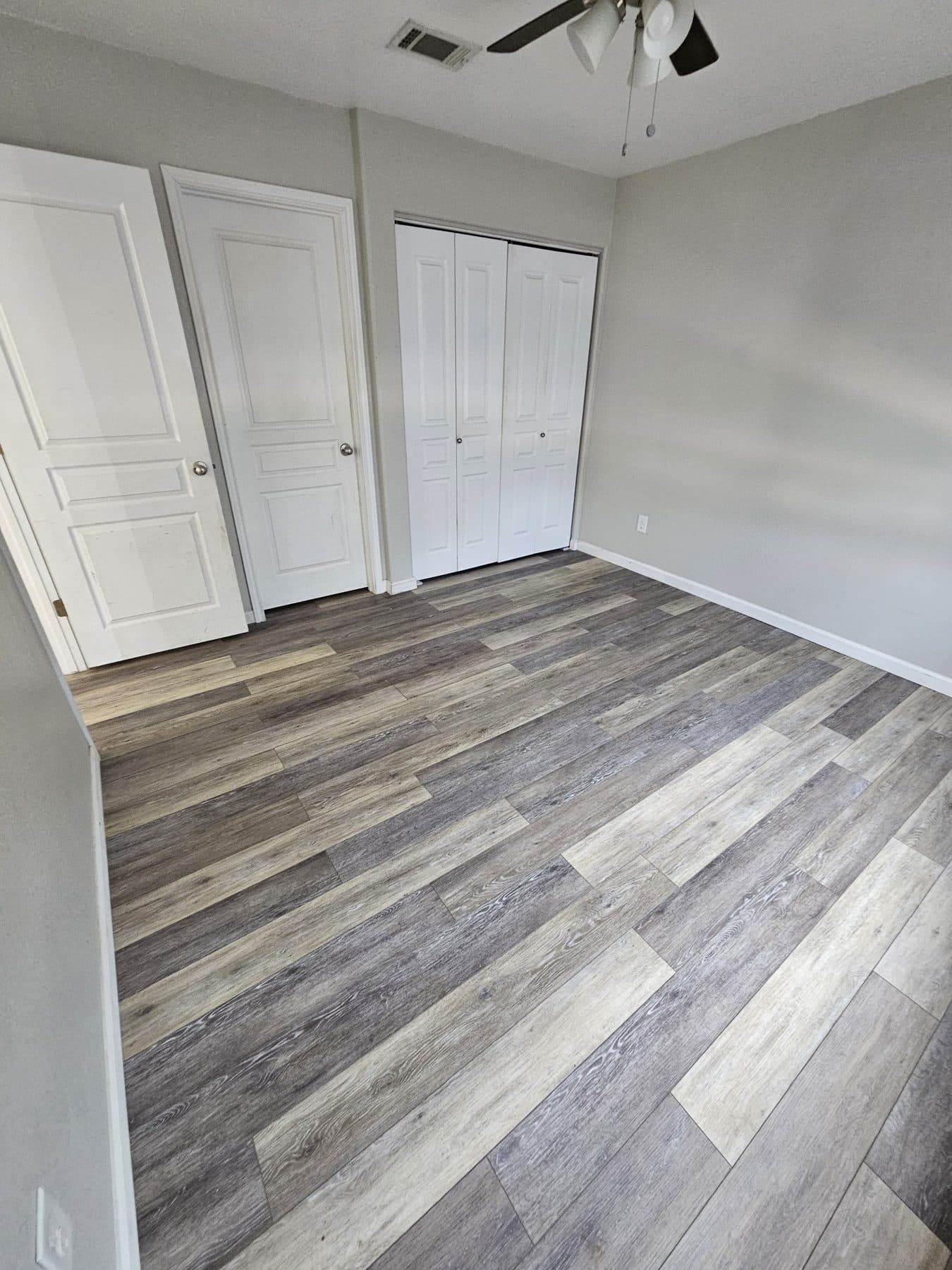
This is the most common question we get on flooring quotes, and the honest answer is that LVP is the right call for most Central Texas homes — but not all of them, and the exceptions matter.
Here is the comparison without the sales pitch in either direction.
The short comparison
| Luxury vinyl plank | Engineered hardwood | |
|---|---|---|
| Installed cost | $4 – $8 / sq ft | $8 – $14 / sq ft |
| Waterproof | Yes, fully | No — water is its weakness |
| Scratch resistance | Very good | Moderate, dents under pets |
| Refinishable | No — replace planks | Once, sometimes twice |
| Feel underfoot | Slightly softer, hollower | Solid, warmer |
| Resale perception | Neutral to positive | Positive, especially higher end |
| Realistic lifespan | 15 – 25 years | 25 – 40 years |
Why LVP wins in most Central Texas homes
Almost every home built here since the 1970s sits on a concrete slab. Slabs release moisture, and our clay soil moves seasonally, which means the slab moves with it. LVP is dimensionally stable and waterproof, so it tolerates both far better than wood does.
Add the practical reality of Texas living — dogs coming in off dry summer ground, limestone grit tracked in constantly, kids, and the occasional plumbing surprise — and a waterproof wear layer stops being a luxury.
When engineered hardwood is genuinely the better call
There is also a case nobody makes often enough: if you have original hardwood under carpet, refinishing it usually beats replacing it on both cost and resale. We find longleaf pine and oak under carpet in Travis Heights and Hyde Park regularly. Always pull a corner and look before you commit to tearing anything out.
- Older homes on pier-and-beam with a wood subfloor, common in central Austin, Wimberley and around Gruene
- Higher-end homes where buyers expect real wood and will notice its absence
- Bedrooms and formal living areas that stay dry and see gentler traffic
- Where you are matching existing hardwood you are keeping — LVP never quite matches wood
What to look for when comparing LVP products
The cheapest LVP on the market is genuinely bad flooring, and it is what gives the category its mixed reputation. Mid-grade LVP with a 20 mil wear layer is a completely different product from the $2 per square foot special.
- Wear layer thickness — 12 mil is fine for a guest room, 20 mil or better for a family home with pets
- Overall thickness — thicker planks feel less hollow and hide minor subfloor imperfection
- Attached underlayment, which quietens the floor considerably
- A rigid SPC core rather than a flexible one for long open-plan runs
- The locking system — cheap locks are exactly where wide-span floors fail at the seams
What we would put in our own house
LVP through the main level, entries and anywhere near water. Real wood in bedrooms if the budget stretches and the subfloor suits it. Tile in mudrooms and full baths.
That is genuinely what we recommend most often, and it has nothing to do with margin — the mid-grade LVP we push is not the highest-margin product we sell.