
Painting · 6 min read
How long does exterior paint really last in the Texas sun?
· by Dustin Allan, Optimal Home Services
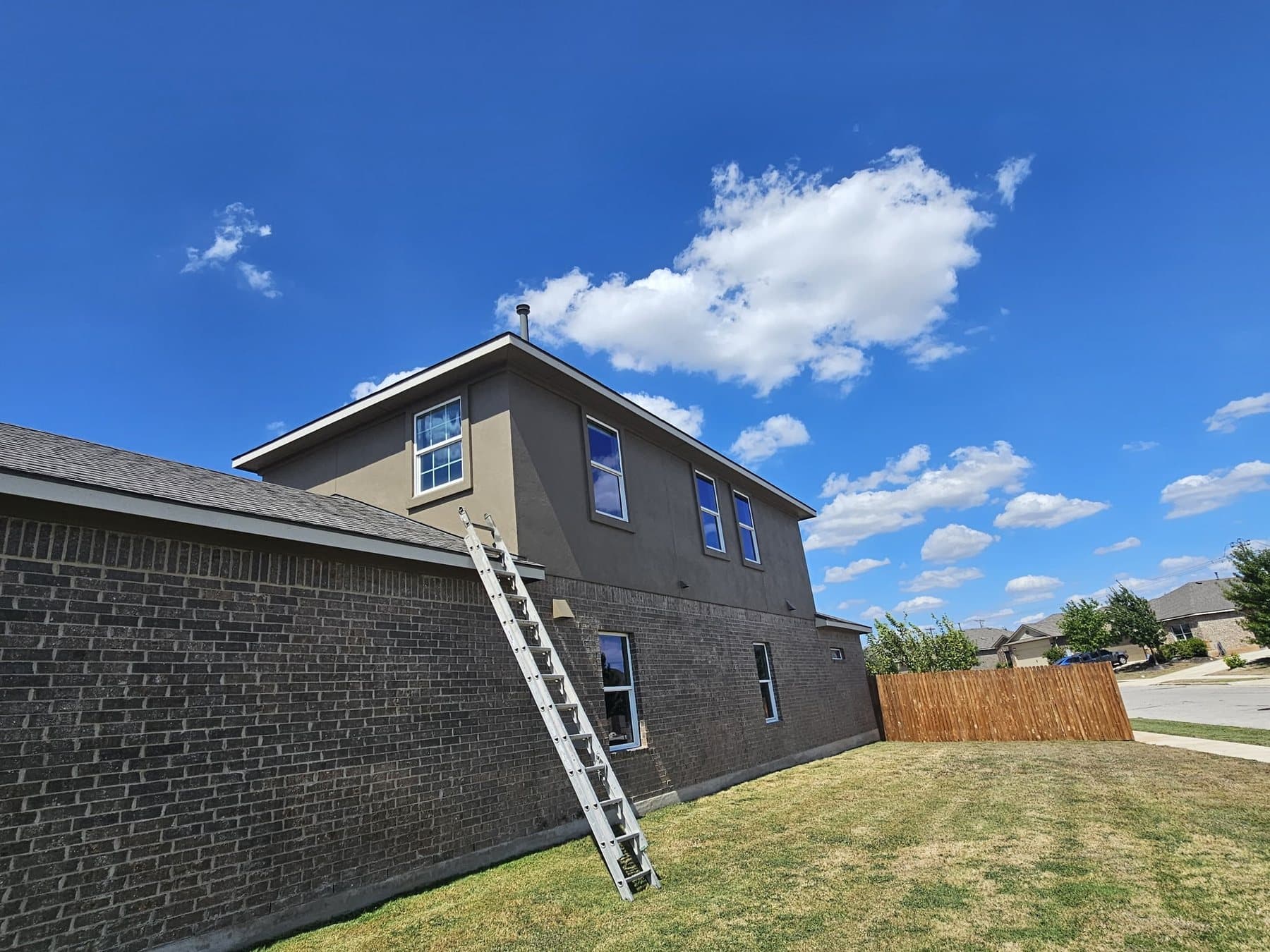
Paint manufacturers quote lifespans based on national averages. Central Texas is not average. We get roughly 300 days of sun a year, summer surface temperatures that push past 150°F on a west-facing wall, and a hail season that resets the clock on anybody's warranty.
Here is what actually holds up around Kyle, Buda and Austin — and the thing most homeowners get wrong about when to repaint.
Realistic lifespans in Central Texas
Those are ranges for a properly prepped job using a quality exterior product. A thin builder-grade coat over unwashed siding will not reach the bottom of any of them.
| Surface | National claim | Realistic in Central Texas |
|---|---|---|
| Fiber cement / HardiePlank | 12–15 years | 8–12 years |
| Stucco | 10–15 years | 7–10 years |
| Wood siding and trim | 7–10 years | 4–6 years |
| Cedar / exposed Hill Country wood | 7–10 years | 3–5 years |
| Front door (direct sun) | 5–7 years | 2–4 years |
Your west and south walls fail first — every time
UV degradation is not evenly distributed. The west elevation takes the brutal late-afternoon sun during the hottest part of a Texas day, and the south takes the longest total exposure. Those two faces routinely fail years before the north side shows anything at all.
This is worth knowing because it changes the economics. We have had Dripping Springs and Belterra clients repaint only the west and south elevations at roughly half the cost of a full exterior, then do the remaining sides three or four years later when they actually needed it.
Any painter who quotes you a full exterior without walking all four sides is not looking closely enough.
The signs it is time — and the signs it is past time
The last item is the one to act on. Once water is reaching bare wood, you are no longer deciding about paint — you are deciding about rot repair, and that gets expensive fast. Fascia and soffit replacement costs multiples of what repainting them would have.
- Chalking — powder on your hand from a dry wall. The earliest real warning.
- Fading, especially reds and dark blues going flat and dusty on one elevation
- Hairline cracking that looks like dry riverbed, usually on stucco
- Caulk pulling away at trim joints and window perimeters
- Any bare wood showing at fascia, soffits or window sills — this one is urgent
What actually extends the life of a Texas exterior
- Wash it. Pressure washing before painting is not optional here, and neither is letting it dry fully.
- Prime bare spots specifically — spot-priming exposed wood and patched areas matters more than a blanket coat.
- Use a premium exterior line with real UV inhibitors. On a west wall the price difference pays back in years.
- Caulk properly at every joint, then check it annually — caulk fails long before paint does.
- Rinse the house once a year. Hill Country limestone dust and pollen hold moisture against the surface.